
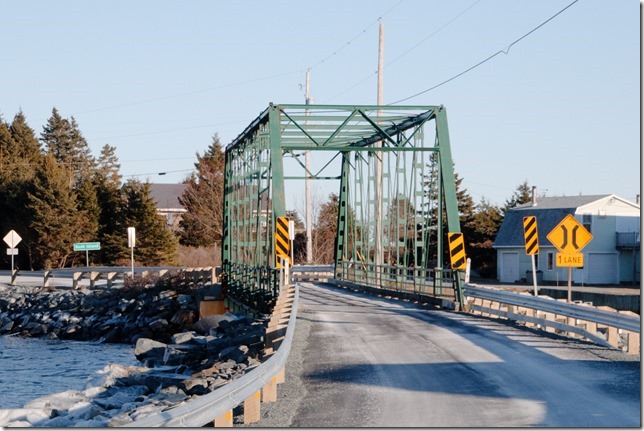
The bridge over Crooked Channel, connecting George Island to Bush Island
The bridge over Crooked Channel, connecting George Island to Bush Island
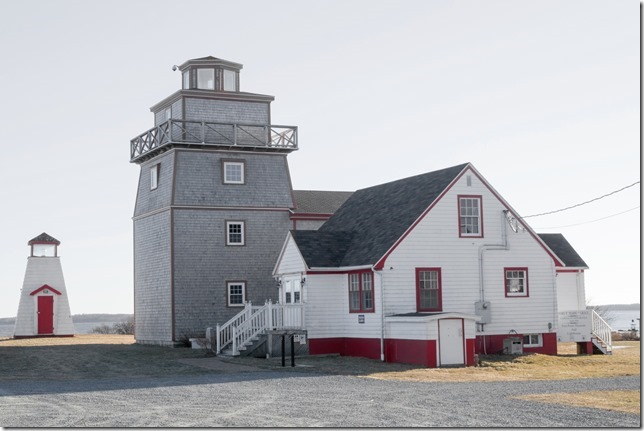
Fort Point Museum
Fort Point is located on a narrow point of the LaHave River, across from Kraut Point and Romkey Head on Dublin Bay.
You might think that this being Fort Point, that the lighthouse would be the Fort Point Lighthouse. Nope, Fort Point Lighthouse is to the south in Liverpool. What look lighthouses are not even navigation aids – they are just part of the museum.
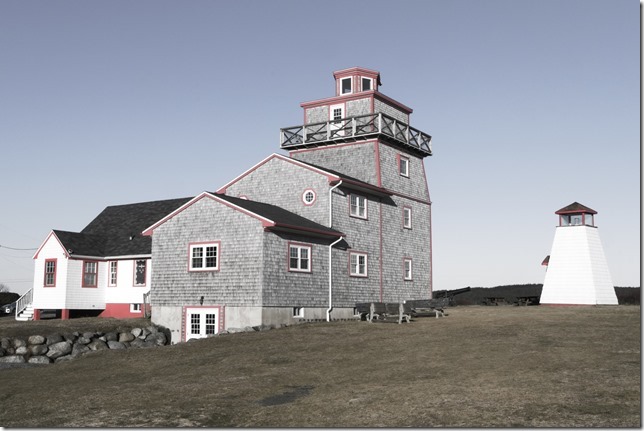
The museum, located in a former lighthouse keeper’s cottage
The point is enriched by over 400 years of history, starting when Champlain arrived in 1604. The point became the first capital of New France, when a French settlement was established by the Lieutenant General and Viceroy of New France, Isaac de Razilly.
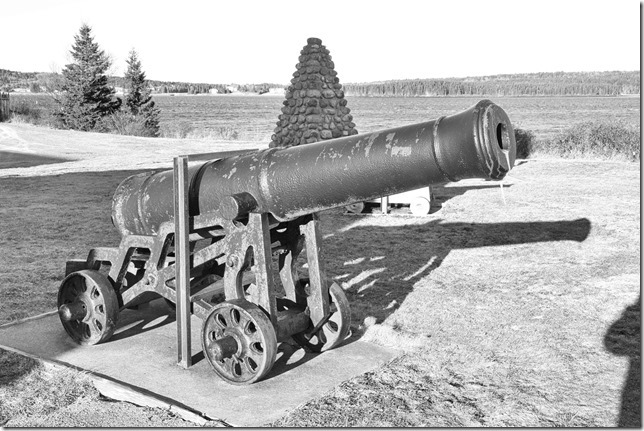
Fort Point is also the location of Fort Sainte Marie de Grace National Historic Site. While the land where the original fort was located has eroded away, a Historic Sites and Monuments Board of Canada cairn is located near the original location of the fort. Interestingly, the National Historic Site designation only refers to the footprint of the cairn.
The site of the fort was registered as an historic site on 4 June 1924.

MV Scotian on the LaHave River crossing
The LaHave Ferry is a cable ferry that crosses the Lahave River east of LaHave. The ferry allows connections between Highway 331 and Highway 332 without having to travel to Bridgewater on one side of the LaHave River, and then back down on the other side.

Pictured above, the Scotian is a replacement ferry for the Brady E. Himmelman. Unlike the Brady E. Himmelman, Scotian can operate as a cable ferry or a self propelled barge.

LaHave Islands Marine Museum – Jenkins Island
Originally a United Methodist Marine Access church, the LaHave Islands Marine Museum was opened in 1978 and is a Municipal Registered Heritage Building.

A beautiful fishing shed overlooking Little Channel on George Island, at the south end of the bridge that crosses over Crooked Channel to connect with Bush Island
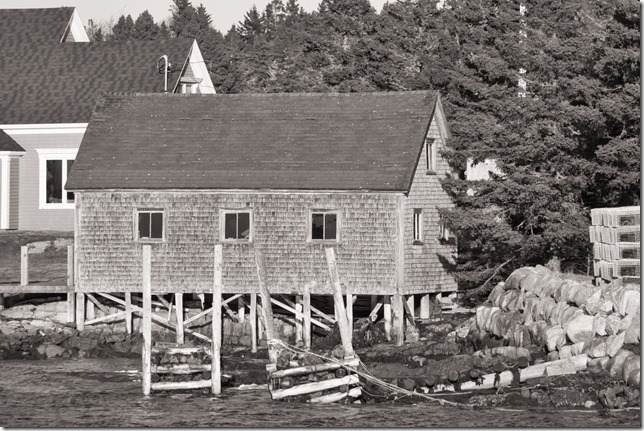
A beautiful fishing shed on George Island
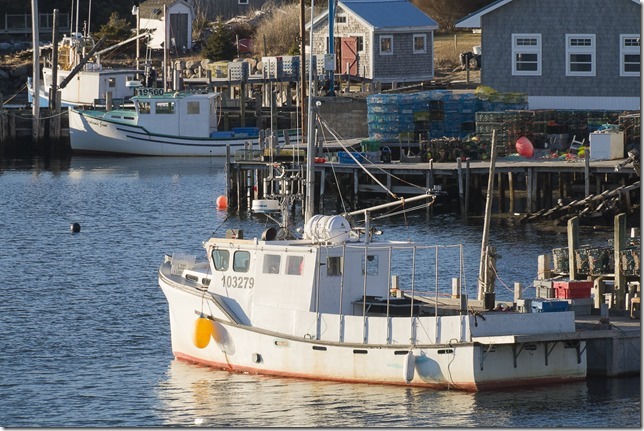
Lobster boats at the Government Wharf on the southwest tip of Bush Island

The former HMCS Cormorant, Hannah Atlantic, and Ryan Atlantic II in Bridgewater
In the Showcase network television show Haven, the Cape Rouge is a fishing boat owned by a character named Duke Crocker. In real life, it is one of the derelict ships on the Lahave River, in Bridgewater.

Ryan Atlantic II
Besides being a star in many episodes of a television series, on 10 March 2014, Ryan Atlantic became the first of two ships large ships that sank while alongside in Bridgewater, the other being almost exactly a year later when the former HMCS Cormorant sank.
After an extensive salvage and oil containment operation, the ship was refloated.

Hannah Atlantic
Hannah Atlantic – ex Cape Anne
Ryan Atlantic II – ex Cape Rouge
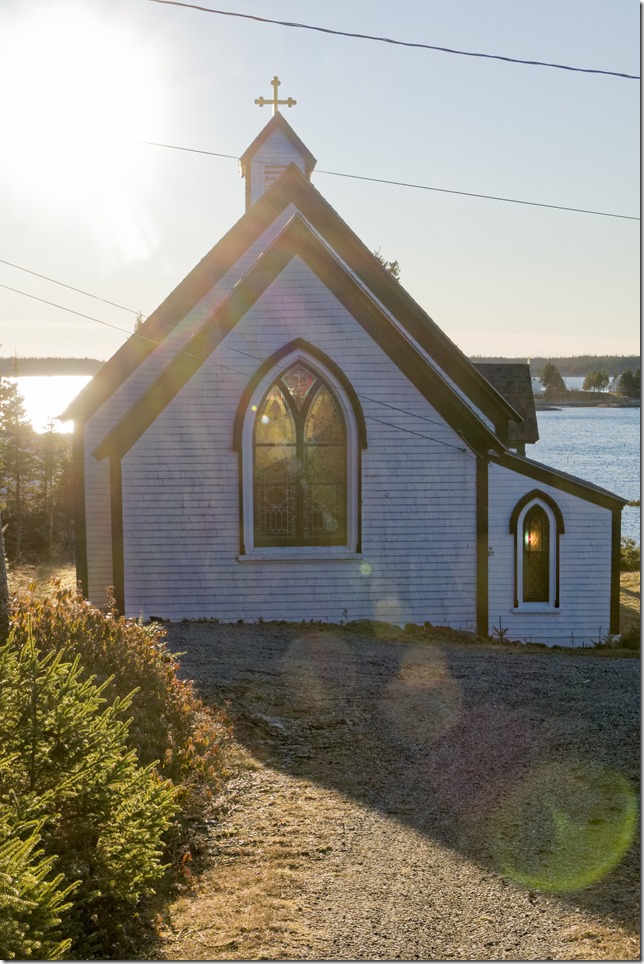
The back entrance and a view of Crooked Channel
St. John Evangelist Anglican Church is a small Victorian Gothic Revival building located on Bell Island in the LaHave Islands, on a hill overlooking Crooked Channel. The church was built and opened for service in 1903, and was consecrated in 1908.
St. John Evangelist Anglican Church is one of six Lunenburg County churches built by Thomas A. Hemeon.
The church was recognized as a National Historic Place on 30 September 1997.

Behold – the donair. A Halifax delicacy that is both tasty and messy
The Halifax donair was invented in the 1970s by Peter Gamoulakos.
Donair meat is spiced ground beef that’s shaped into a large loaf and roasted on a spit, then shaved and seared on a flat top range. The meat is placed on a thin, Lebanese-style pita, topped with tomatoes and raw onions, dosed with sweet sauce, then wrapped in tinfoil and handheld by the diner.
In 2015, Halifax city council made the donair the city’s official food.