

As early as 1952 the RCAF issued requirements for a new long-range patrol Aircraft to replace the wartime Lancaster. By 1958, less than three years from contract start, the first Argus was airborne and on 1 May 1958, CFB Greenwood received the first operational Argus.

The name “Argus”, came from the Greek mythology. Argus, “the vigilant watchman”, was the 100 eyed giant; a most fitting name for an Aircraft which at that time had more sensors on board than any other single Aircraft.
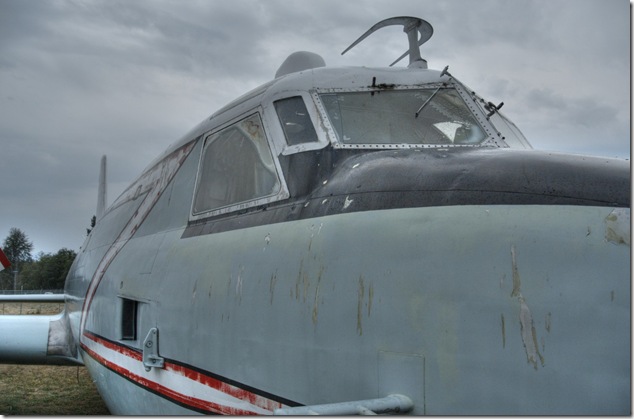
In all, 33 were produced, the last being 20742 (no. 20742 was delivered in 1961). The first 13, 20710 – 20722, were Mark I’s; the reminder being Mark II’s. The most obvious difference between the two was the much larger chin radome on the MK I series for the APS 20 radar system. The MK II used the British ASV 21 search radar. Although only 33 were built, there were still 31 in the Air Force inventory when it was retired in 1982 and replaced by the CP-140 Aurora.
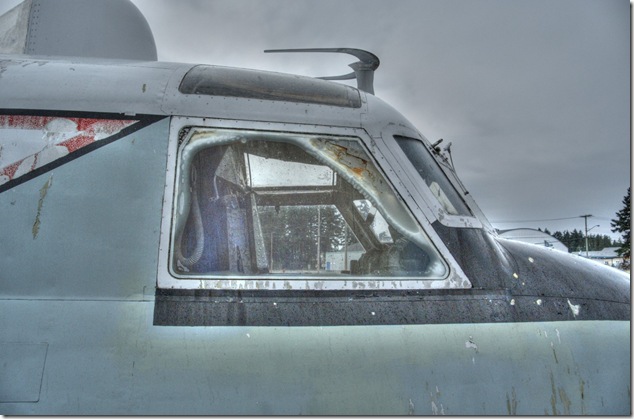
Adapted from the well known Bristol Britannia in 1954, the Argus carried an armament load of almost 4 tons in two bomb bays. Normally the crew consisted of 3 pilots, 3 navigators, 2 flight engineers, and 7 electronic equipment operators.
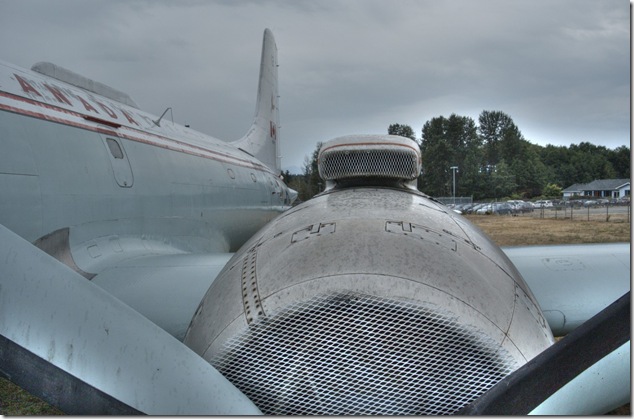
The Argus flew missions in excess of twenty hours frequently. Fully loaded it could fly from Newfoundland to Ireland, patrol for 8 hours, return from this 1500 mile transit and still have an hour of reserve fuel on board. An Argus flown by 407 Maritime Patrol Squadron held the record for the longest flight by an unrefueled Aircraft, slightly over 31 hours. This record stood for almost twenty years until broken by a Rutan experimental Aircraft which circled the globe unrefueled.
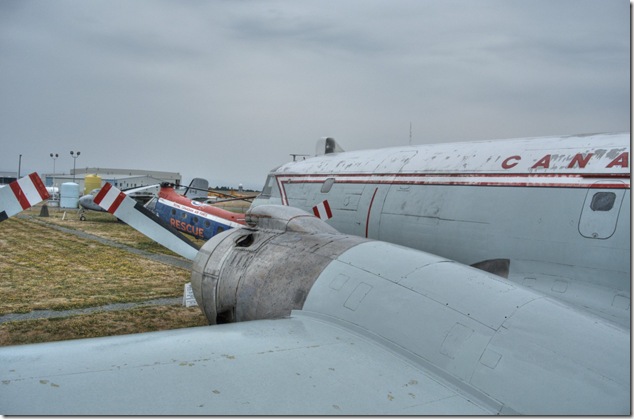
At CFB Comox, the Argus replaced the Lancaster and Neptune aircraft types previously flown by 407 Squadron, the Demons. Eventually, the Argus was itself to be replaced by the current CP-140 Aurora aircraft.
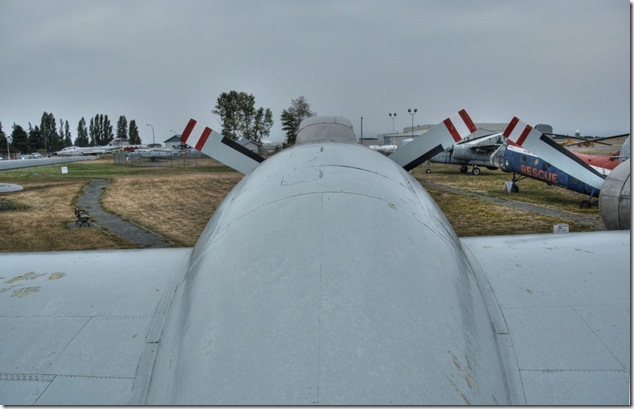
Crew / Passengers:15: Three Pilots, two Flight Engineers, four Navigators, six Observers (post 1968)
Powerplant: four 3,400 bhp (without ADI) Wright Model 981 TC18EA1 Turbo-Compound Cyclone R3350 engines
Performance:
- Max Speed: 288 mph (463 km/h)
- Cruising Speed: 207 mph (333 km/h)
- Service Ceiling: 24,200 ft (7,376 m)
- Range: 4,420 nm (8,190 km)
- Endurance: 261/2 hr
Weight:
- Empty: 81,000 lbs (36,744 kg)
- Gross: 157,000 lbs (71,364 kg)
Dimensions:
- Span: 142 ft 31/2 in (43.38 m)
- Length: 128 ft 3 in (39.09 m)
- Height: 36 ft 8 1?2 in (11.2m)
- Wing Area: 2,075 sq ft (192.77 sq m)
Armament: 8,000 lbs of torpedoes, bombs, depth charges, mines.
Original Cost: $5,513,000