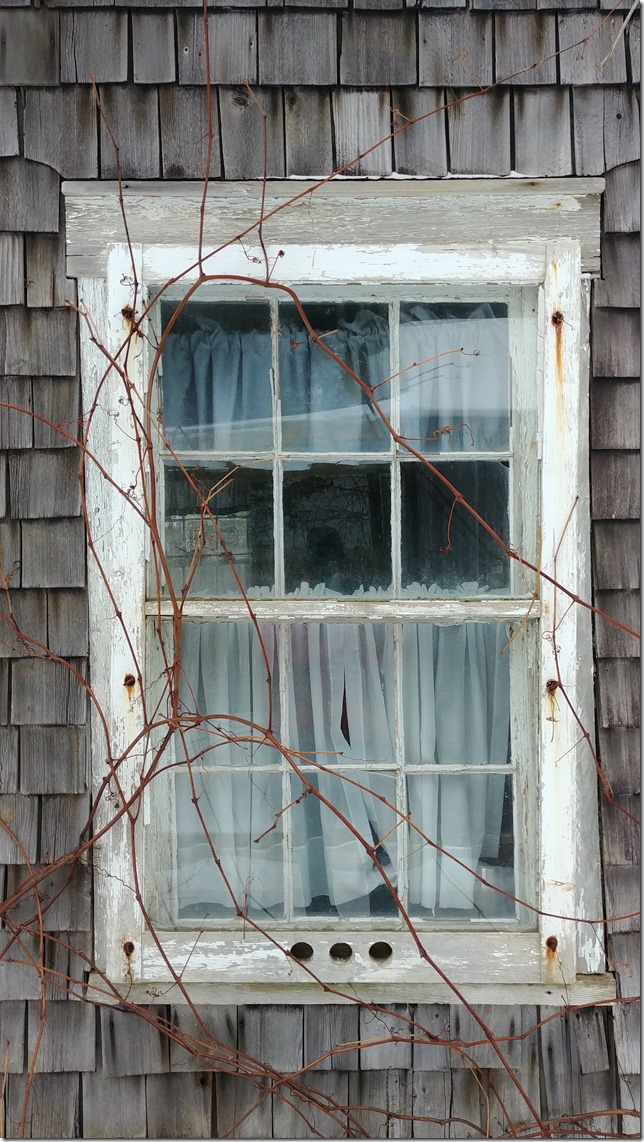
Just a window into the past
Just a window into the past
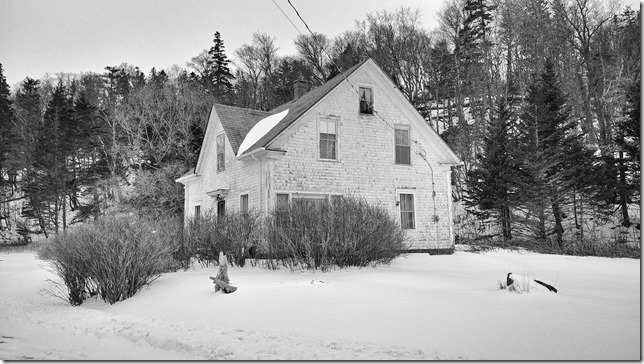
One of the beautiful houses of Nova Scotia, this one in Victoria Harbour

Sometimes a side trip along a dirt road or a trail can lead to interesting adventures and a greater understanding of the history of an area – this path near Port Royal is a good example.
It’s not really a path though – it’s part of a dyke.
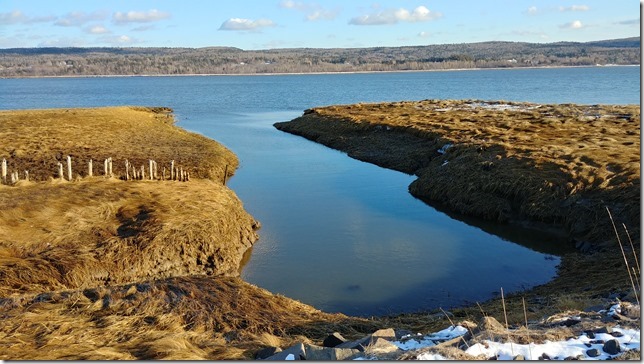
In 1670, the new French governor of Acadie observed the settlements close to Port Royal and wrote, “On these dykes they raise with so little labour large crops of hay, grain and flax, and feed such large herds of fine cattle that an easy means of subsistence is afforded, causing them altogether to neglect the rich upland.”
By the 1680s, Acadians already had half a century’s experience of transforming land in Acadie. The first recorded evidence of dykelands comes from the Port Royal area at the site of the first successful permanent French settlement in North America.

The technology that the Acadians used to transform wetlands and marshes could not have been simpler: special spades, pitchforks, axes, and hollowed-out tree trunks. Much more important than the tools was the ingenuity of the people to read the natural drainage systems of the marshes and then to build dykes that channeled the flow of those creeks in only one direction, discharging into the sea.
One element of the Acadians’ success was to use sod cut from the original wetlands in their earthen dykes. In a process similar to peat extraction in western Europe, special spades were used to cut bricks of sod in specific sizes and shapes that were then assembled to form the dyke. The grasses and rushes in the sod could withstand being covered by salt water for many hours each day. They also had deep and densely matted root systems that anchored them when the sea water swirled over them, protecting the exposed sides of the dykes at high tide
A 360° look around one of the dykes
A 360° look around the Nova Scotia side of the Bay of Fundy shore at Victoria Harbour

I stopped in Windsor to take a look at the building that was once the home of Nova Scotia Textiles Limited – it’s an interesting building that is somewhat of a landmark for me as I travel along Highway 101.
Being a photojournalist I had to do more than take a few shots – I had to do a bit of research to learn the history of the building and Nova Scotia Textiles Limited, and what the current fate of the building is.

Let’s start with some local history.
One of the early settlers of Windsor, William Nesbitt, was granted land near that included a small island near Fort Edward. Nesbitt Island was was connected across marsh land to Windsor by a road called Nesbitt Street.
With the coming of the railway, much of the dyked land between Fort Edward and Nesbitt Island became a rail yard, and Nesbitt Island became the other side of the tracks and the site of heavy industries.
It was designed for carding, spinning and weaving basic cotton fabrics.In 1881 the newly formed Windsor Cotton Mill company purchased 3 lots of land on Nesbitt Island, and commenced construction of a mill for carding, spinning and weaving of basic cotton fabrics was completed in 1884. Homes were built on the ‘Mill Island’ to accommodate the mill workers.

The Windsor Cotton Mill, later Nova Scotia Textiles, became the home to the Eureka Woolen Manufacturing Company in 1915, when their original factory in Pictou County was destroyed by fire.
In 1891 the factory was sold to the Dominion Cotton Mills Company. The factory closed due to economic conditions from 1912 until 1916. In 1916 the mill was bought by the Nova Scotia Underwear Company.
In 1920, J.E. Mortimer came to Windsor from England to restructure the company and in 1922 Nova Scotia Textiles Limited was incorporated as primarily a long underwear manufacturer. The company was taken over by his grandson, J. Edward Macdonald, in 1956 and he continued to run the company until the plant closed in 2006.

Look at this – you can still see parts of the word “EUREKA”, and that’s what inspired me to take a closer look at this piece of history – at one point the mill was home to the Eureka Woolen Manufacturing Company.
And now you know…
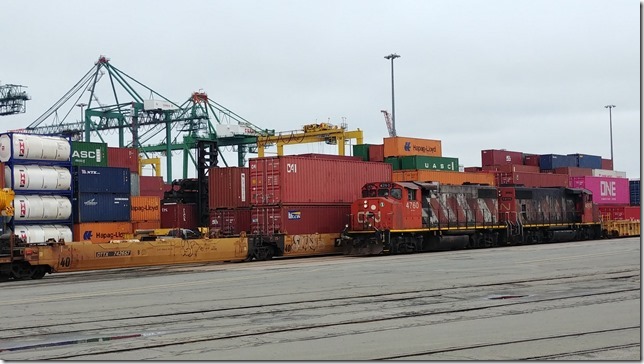
A pair of rather grimy Canadian National locomotives at the Fairview Cove Container Terminal on Bedford Basin. CN 4760 and CN 4806 are END GP 38-2W locomotives.

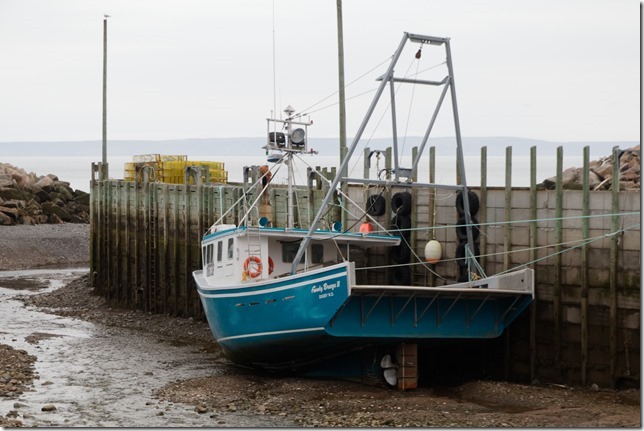
Fundy Breeze II in Harbourville at high tide and at low tide – quite the difference
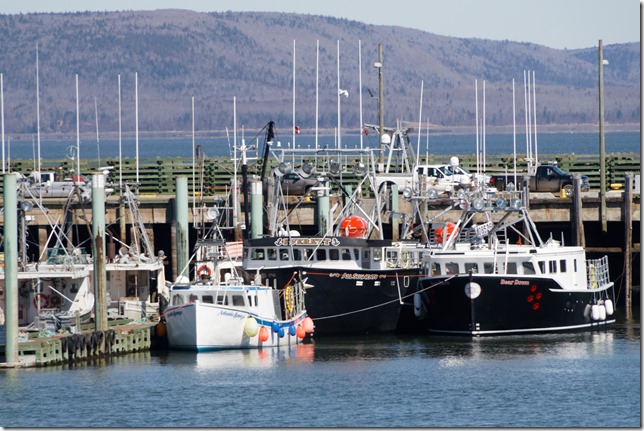
Looking across Digby Gut toward Victoria Beach
Early in the year I had ventured out to Victoria Beach, across the Bay of Fundy from Digby. On this trip I spent some time at the Port Of Digby Fisherman’s Wharf, which is located at the southern end of The Raquette bay.
This is among my favorite places to shoot stills of fishing boats.
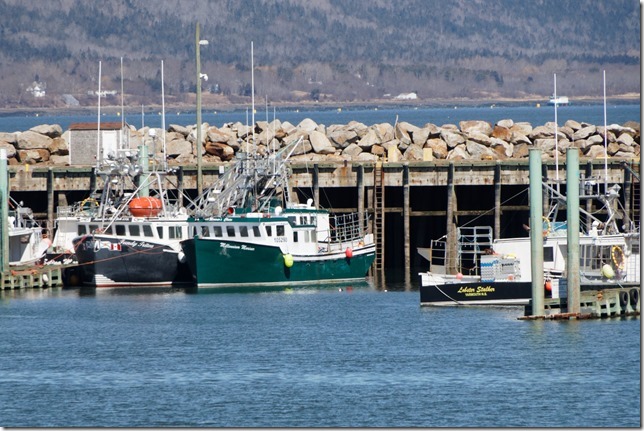
In the upper left hand corner you can see the access road leading to the Victoria Beach Lighthouse – behind me is the Digby Pier Lighthouse…

The Bear River Lighthouse is hidden in the woods along an old railway right of way – you can catch a glimpse of it heading west on Highway 101into Digby.
I had almost given up driving around trying to find the lighthouse, until I spotted another glimpse of it through the trees, found a parking spot and took a short walk along a muddy path.

The Bear River Lighthouse is a wooden square-tapered tower located in a wooded area on the western shore of the mouth of Bear River at Winchester Point in Smith’s Cove. The lighthouse marks the entrance to Bear River from the Annapolis Basin. Built in 1905, it is the first lighthouse on the site.

The building stands on ground 45 feet above high water mark and 100 feet back from the water’s edge. It is a wooden tower square in plan, with sloping sides, surmounted by a square wooden lantern, the whole painted white. It is 32 feet high from its base to the ventilator on the lantern.

The lighthouse had a fixed red light standing 72ft feet above water level and is no longer operating. The Bear River lighthouse was designated as a Heritage Lighthouse on 15 February 2015.
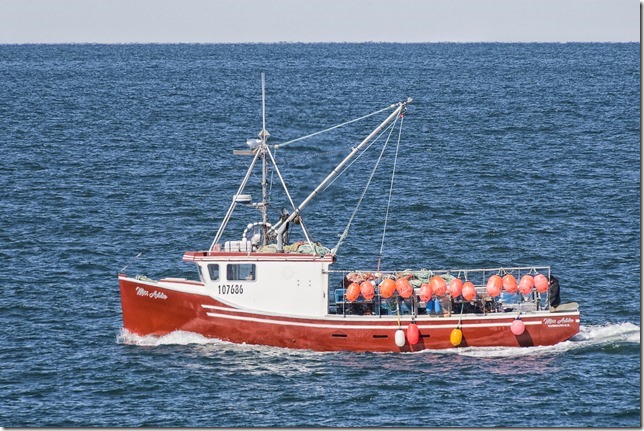
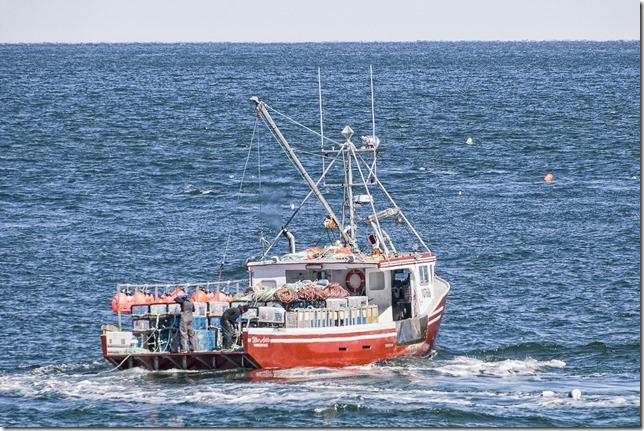
Miss Addie laying lobster pots off Broad Cove, near Digby