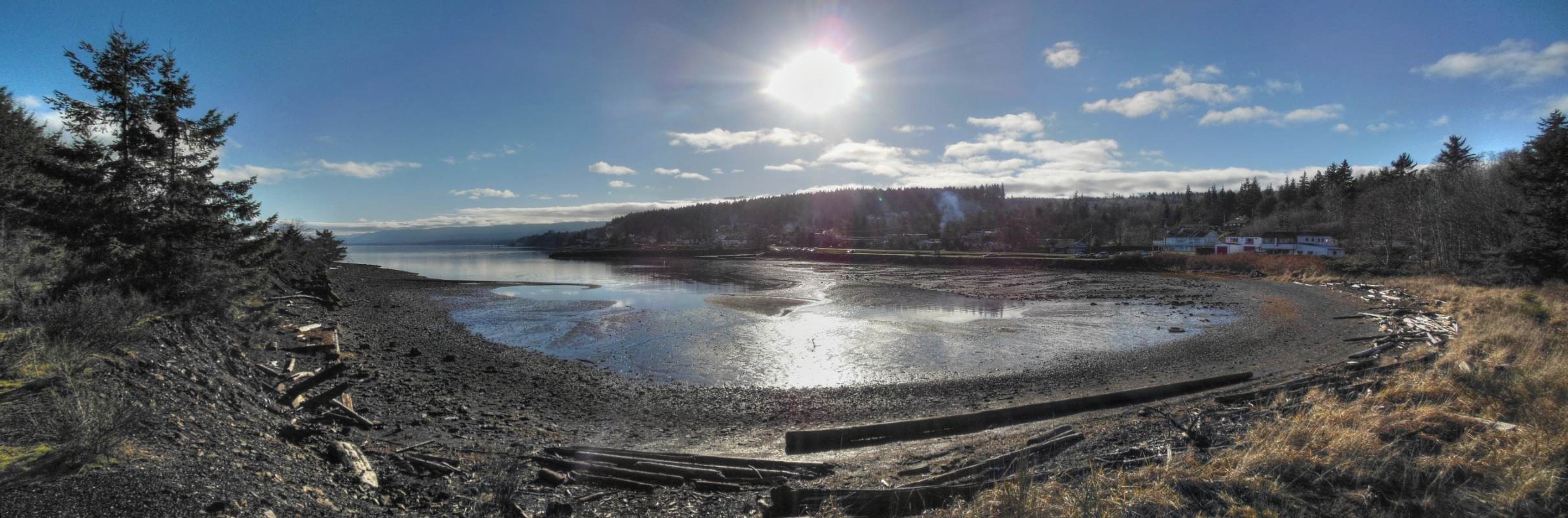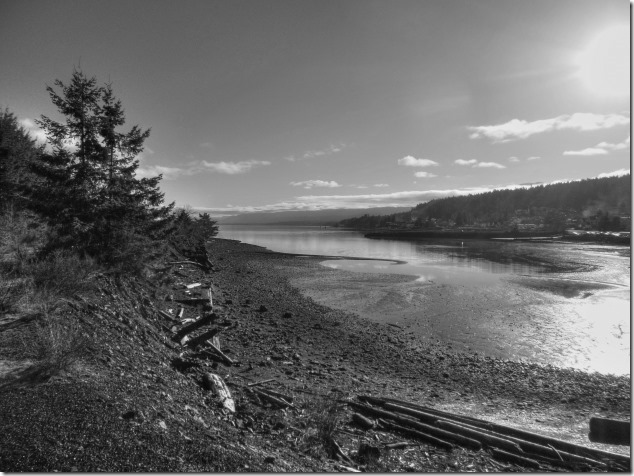
Union Bay was first established by the Union Coal Co. as “Union Wharf” in 1887 as a port for the thriving coal mines at Union to the north (now Cumberland).
A wharf nearly 200 m long and 18.5 m high was constructed, along with a rail network connecting the coal mines to the port in 1887-1888. Nearby, a four-storey washer powered by water from Washer (Hart) Creek processed up to 600 tons of coal in a 10-hour shift and 200 ovens ran 24-hours a day converting coal into coke, the high-grade fuel much in demand by West Coast smelters.
Portions of the coke ovens can still be seen.
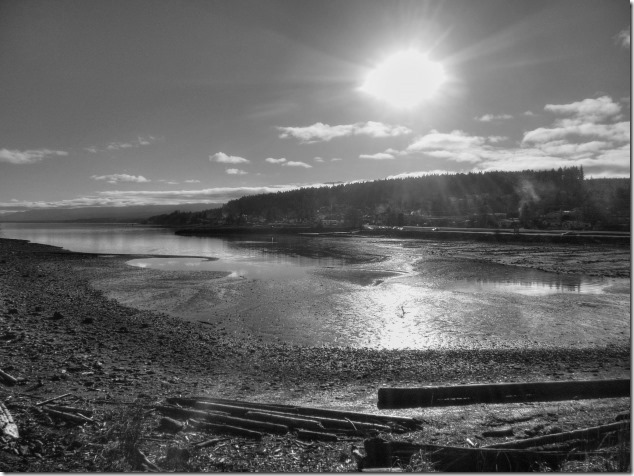
The last sailing ship to carry coal from Union Bay was the Pamir, in 1946. Freighters and barges continued to call until the coal industry slowly faded around the 1950s. After the Cumberland coal mines closed in 1960, many of the structures at Union Bay, including the coal wharf, were torn down by 1966.

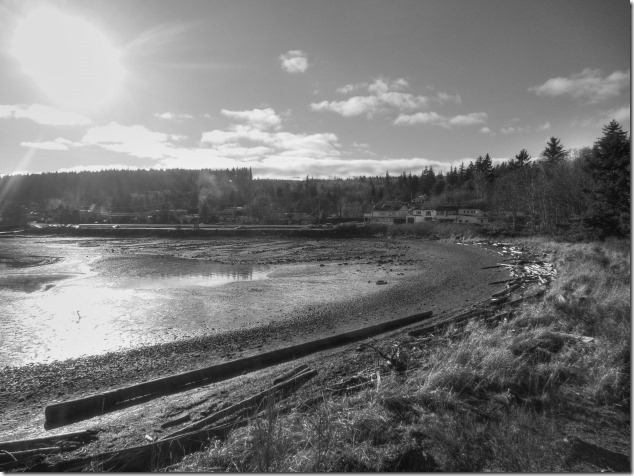
I prefer the black and white images as they reflect the industrial heritage of Union Bay – that being said, the colour panoramic image is how Union Bay is now…