
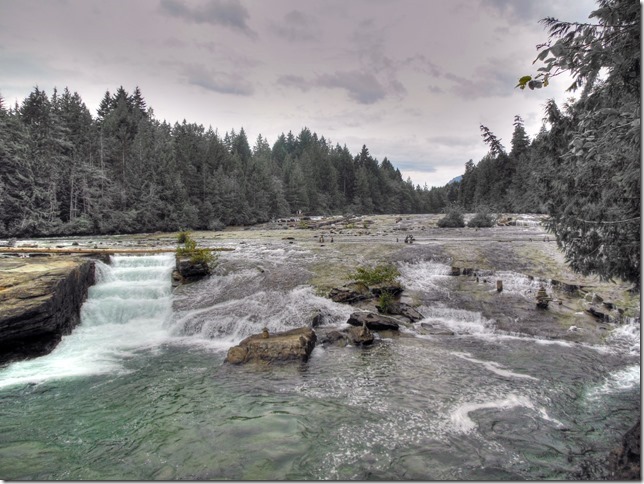
Nymph Falls were the result of an early-1950s creation of a fish ladder on the Puntledge River, completed by the Department of Fisheries and Oceans and BC Hydro.
Nymph Falls were the result of an early-1950s creation of a fish ladder on the Puntledge River, completed by the Department of Fisheries and Oceans and BC Hydro.

Snuneymuxw First Nation cemetery

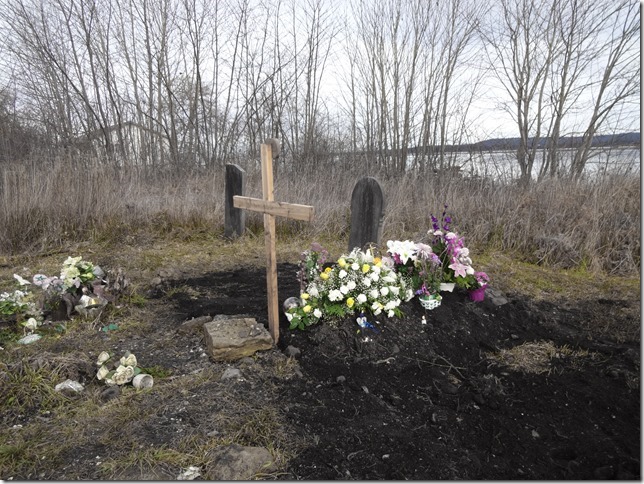
Snuneymuxw First Nation cemetery
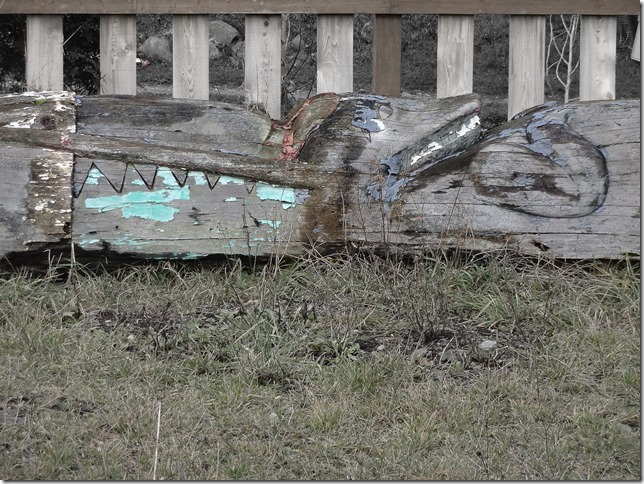
Returning to nature – Snuneymuxw First Nation
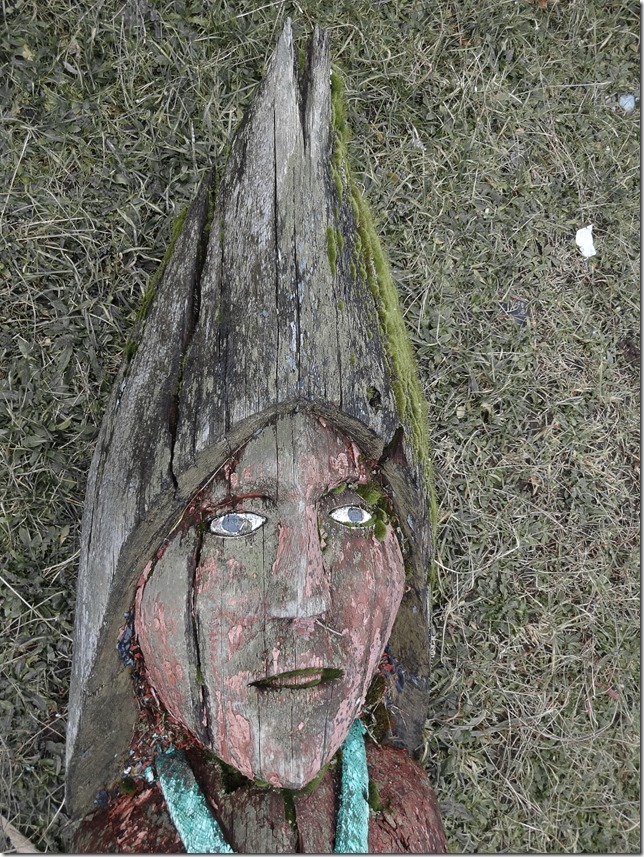
Returning to nature – Snuneymuxw First Nation totem
The Snuneymuxw First Nation is one of the largest Nations in B.C. with a population of over 1,700 people, and one of the few Nations that have a pre-Confederation treaty with the Crown – the Treaty of 1854.
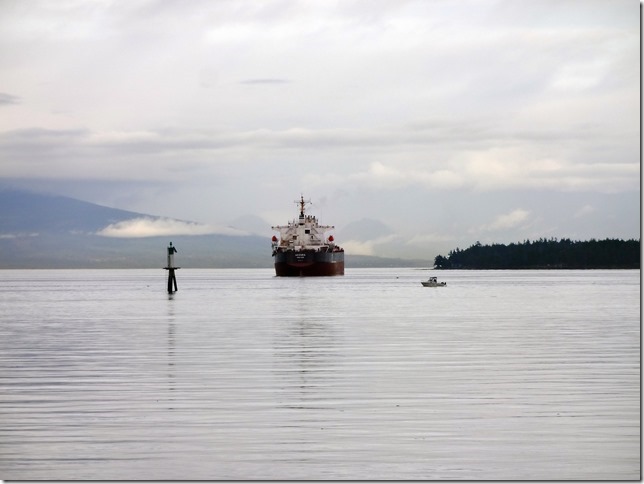
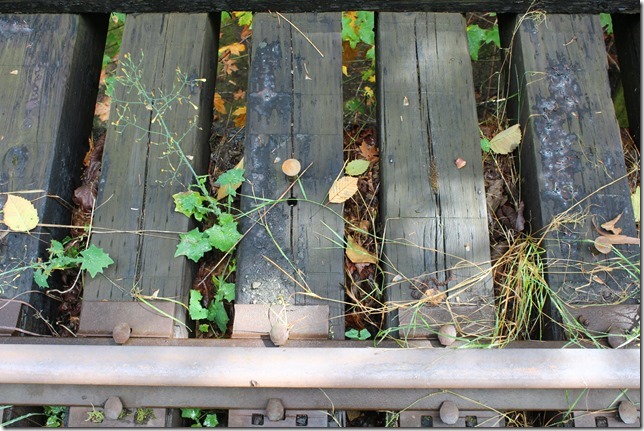
The pictures in this series speak for themselves – no further comment is necessary when viewing where the Esquimalt and Nanaimo Railway once operated between Courtenay and Victoria.
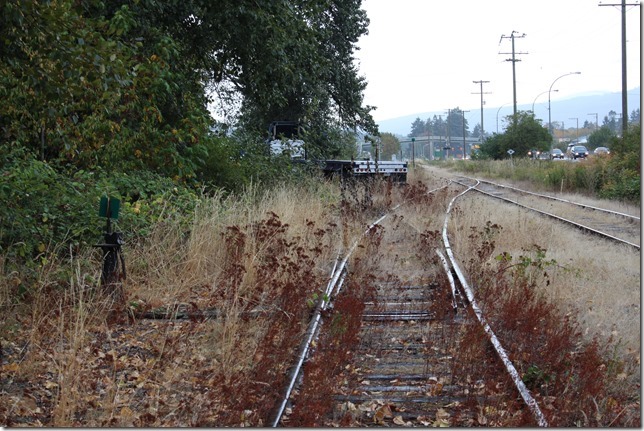
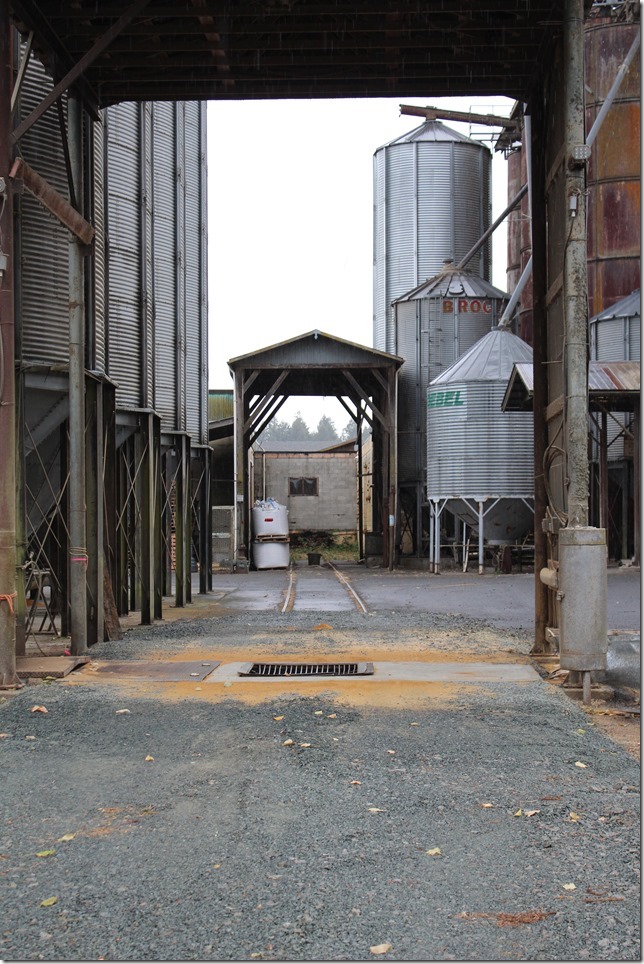
The E&N spur for Top Shelf Feeds

Top Shelf Feeds was the last major customer served by rail south of Nanaimo – rail service was suspended due to speed restrictions on the line and the dismal state of the bridges over the Chemainus and Cowichan Rivers.
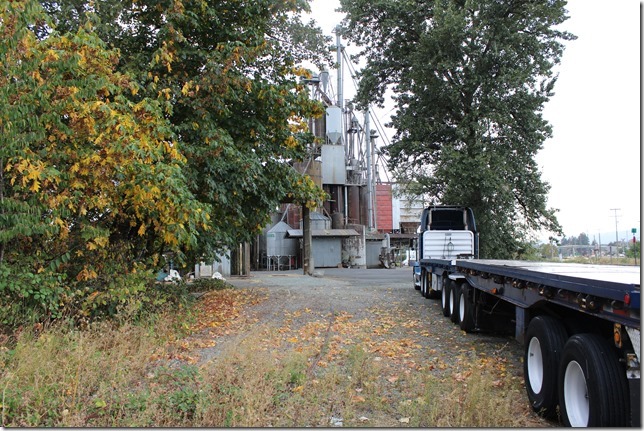
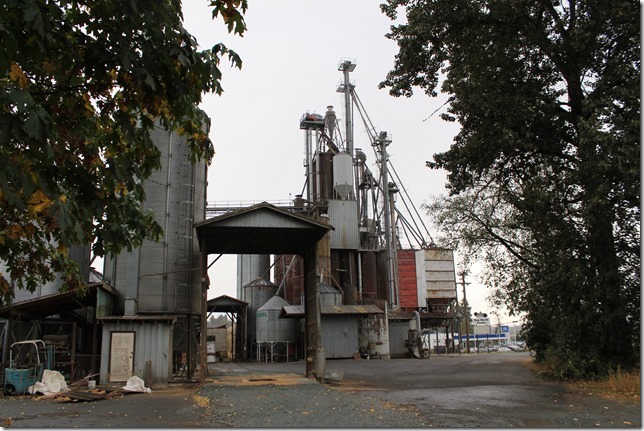
Passenger service on the line was suspended in March 2011 after rail conditions reached unacceptable safety levels. Freight, which could move more slowly, continued between Duncan and Nanaimo until service was finally finally suspended in November 2014.
“This week, after completion of a detailed risk assessment, it was determined that the safest course of action was to temporarily discontinue the freight service to Duncan and Parksville,” says a statement posted on the Island Corridor Foundation website.
The service cancellation followed a recent track inspection jointly conducted with the B.C. Safety Authority, an independent organization responsible for safe installation and operation of technical systems and equipment, including railways, under the Railway Safety Act.
“It is the responsibility of railway owners and operators to ensure the safe configuration and operation of their technical systems and equipment,” said Quinn Newcomb, BCSA spokesman.

The E&N crossing at Powder Point Road


In 1911, the tip of the Nanoose peninsula became known as “Powder Point” when the Giant Powder Company built a cordite and gunpowder plant for mining, land clearing and armaments for World War I.
The company established established a community, complete with water and sewer systems, electricity, telephones and about three miles of railway track. About 100 men were employed until January 1, 1918 when the “dope” house storing nitro-glycerine blew up.
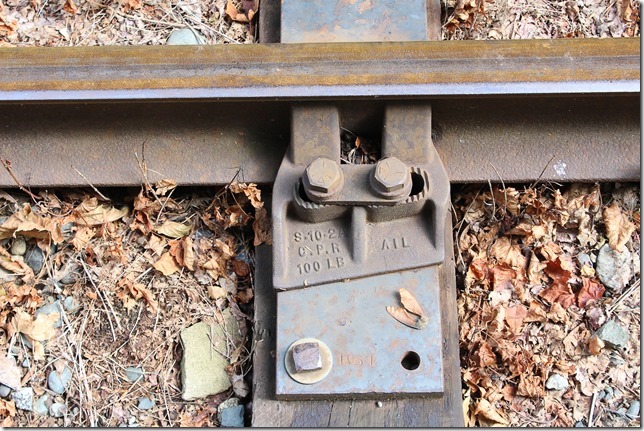
A few relatively short sections of the Victoria Subdivision have been upgraded to 100 Pound rail – that’s rail that weighs 100 pounds per yard. The heavier the rail, the heavier a load it can support, and the the faster that rail traffic can travel (at least in theory…).
The majority of the rail is a mix of 80 and 85 pound rail (129 miles), with only 11 miles being 100 pound rail.
No matter the weight of the rail, the train don’t run here anymore…