Island Horizon

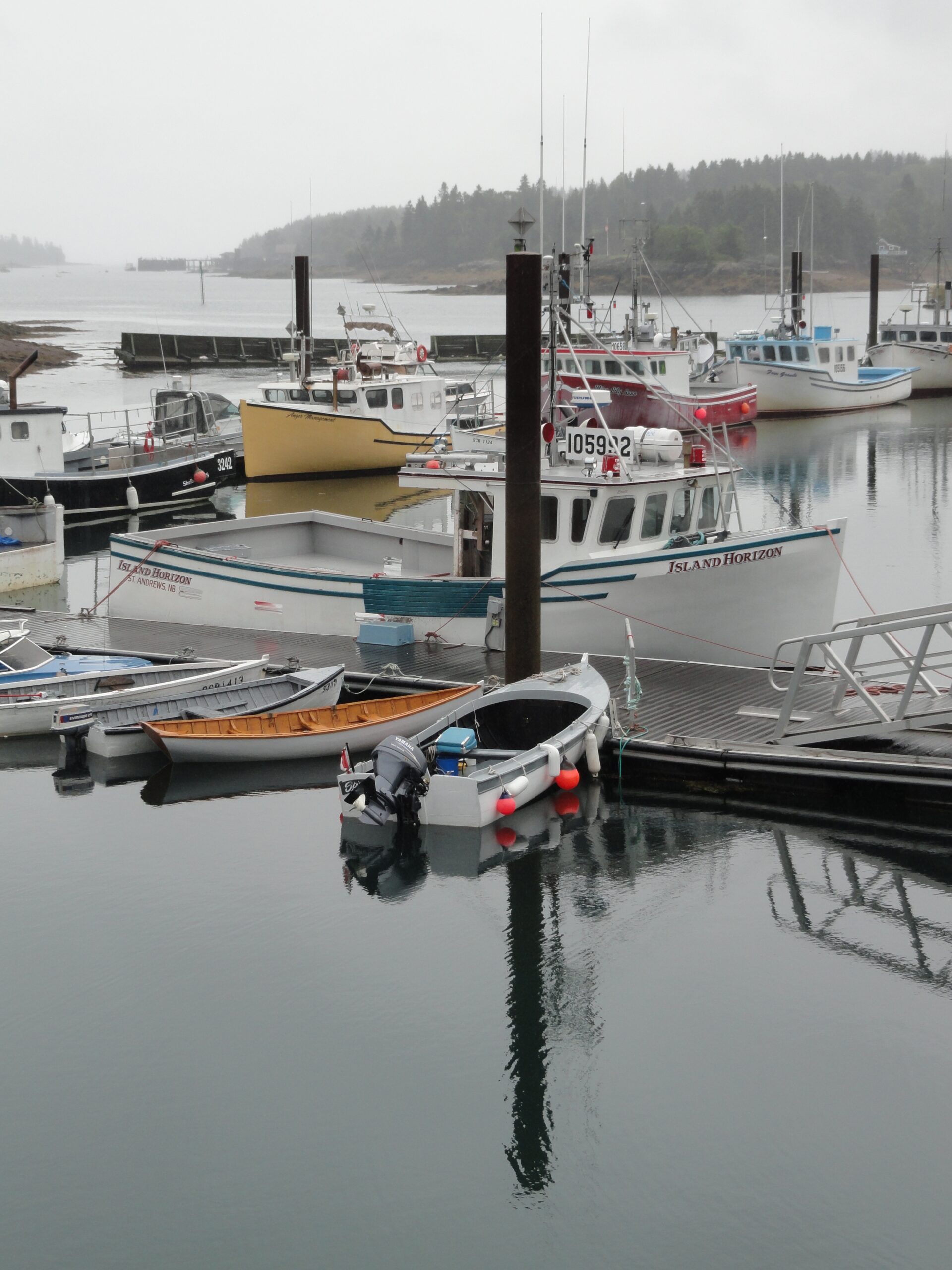
Island Horizon in St Andrews, New Brunswick

Island Horizon is one of the last fishing boats that I photographed while travelling in New Brunswick – I included the image here as it shows the difference in the types of boats that are used on the east and west coasts, and the nature of the fisheries.

Posted in fishing boats, marina, ocean | Tagged , , , | Leave a comment

The Elasmosaur at YQQ

Okay – this is majorly geeky, so fairly warned, right?

Canadian Forces Base Comox is primarily operated as an air force base by the Royal Canadian Air Force and is one of two bases in the country using the CP-140 Aurora anti-submarine/maritime patrol and surveillance aircraft. Its primary RCAF lodger unit is 19 Wing, commonly referred to as 19 Wing Comox.

CFB Comox’s airfield is also used by civilian aircraft. The civilian passenger terminal building operations are referred to as the Comox Valley Airport operated by the Comox Valley Airport Commission. The International Air Transport Association (IATA) airport code is YQQ.

In late November 1988, Mike Trask and his 12-year-old daughter Heather were prospecting for fossils along the Puntledge River just west of the city. Mike was advancing in the lead, kneeling every few meters to examine a particular fossil and to mark it with chalk, for later extraction by Heather following close behind.

Elasmosaur,Comox,Courtenay,Puntledge,fossil,Vancouver Island

Suddenly, as she examined a fossil that her father had just outlined, Heather noticed a group of concretions rising from the exposed shale less than a meter away. Upon further excavation, both she and Mike were astonished to discover a group of fossilized bones from some great beast, as-yet unknown and extinct since the end of the Age of Dinosaurs.

After months of investigation and correspondence with scientists such as the late Dr. Betsy Nicholls at the Royal Tyrrell Museum in southern Alberta, their discovery proved to be the first Elasmosaur recorded in British Columbia — the first of its kind west of the Canadian Rockies.

Casts of the skeleton of a 40ft-long adult Elasmosaur are suspended from the ceiling at the Comox Airport, and at the Courtenay and District Museum and Paleontology Centre. The original fossilized bones found by Trask and his daughter are also on exhibit.

Posted in CFB Comox, tourism, Vancouver Island, Vancouver Island Images | Tagged , , , , , , , | Leave a comment

RCAF Tofino

RCAF Tofino,Radar Hill, Vancouver Island Images,Pinetree Line,Tofino

Originally opened 1943 as a “Radio Detachment”, RCAF Tofino was part of a chain of radar stations conducting surveillance of the Pacific Coast, primarily due to threat of Japanese incendiary balloons.The RCAF, due to the threat of Japanese incendiary balloons established an airfield at Tofino. RCAF Tofino had its own airfield, with a squadron of aircraft ready to respond within 30 minutes.

The radar chain was disbanded in 1945 and RCAF Tofino was closed.

RCAF Tofino,Radar Hill, Vancouver Island Images,Pinetree Line,Tofino

RCAF Tofino was re-opened in 1955 as the domestic site for the newly constructed Radar Hill Station, that was operated as part of the NORAD Pinetree Line network.

RCAF Tofino,Radar Hill, Vancouver Island Images,Pinetree Line,Tofino 

Construction of the Radar Hill site commenced in the early 1950s, with a proposed activation date of January 1954. Radar Hill Station became operational on 15 January  1955 and was closed in December 1957. The operations buildings at the Operations site were dismantled in 1962.
RCAF Tofino,Radar Hill, Vancouver Island Images,Pinetree Line,Tofino

RCAF Tofino was closed on 10 January 1958. The airfield and buildings were transferred to the Department of Transportation, and eventually became the Tofino Airport. While some of the buildings from RCAF Tofino are still standing, nothing remains of the former radar station on Radar Hill.

 RCAF Tofino,Radar Hill, Vancouver Island Images,Pinetree Line,Tofino

Posted in abandoned, airplanes, history, RCAF, Vancouver Island, Vancouver Island Images | Tagged , , , , | 1 Comment

Martin Mars Fire Base

_DSC4262

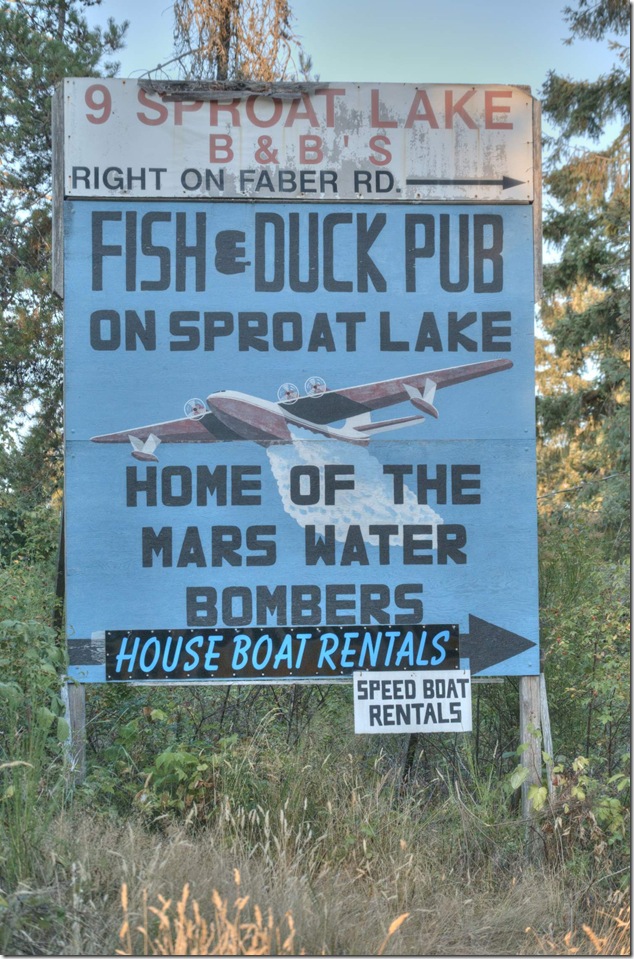
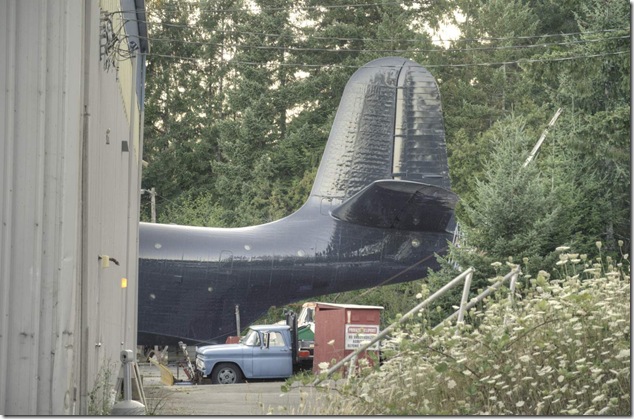
I was looking for the Martin Mars water bombers (flying tankers) on Sproat Lake, and much to my dismay, was suckered by the sign above – it appeared to be indicating that the Fish and Duck Pub was the home of the huge air planes.

Nope. It is not… don’t be fooled by the sign.

Martin Mars,Sproat Lake, Highway 4,Coulson Flying Tankers,Vancouver Island Images,Philippine Mars ,Hawaii Mars

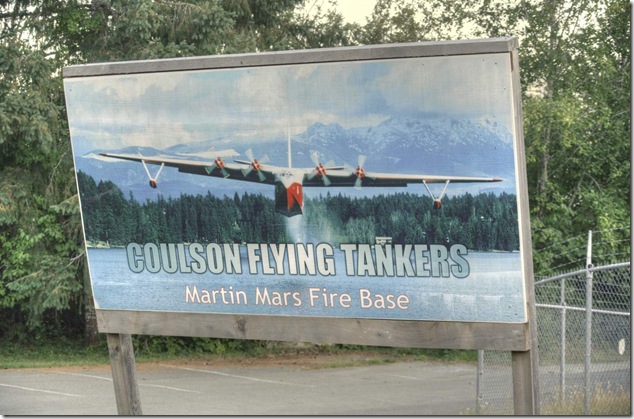
Coulson Flying Tankers is located on Cherry Creek Road, next to the entrance to Sproat Lake Provincial Park, not on or off Faber Point Road.

Martin Mars,Sproat Lake, Highway 4,Coulson Flying Tankers,Vancouver Island Images,Philippine Mars ,Hawaii Mars

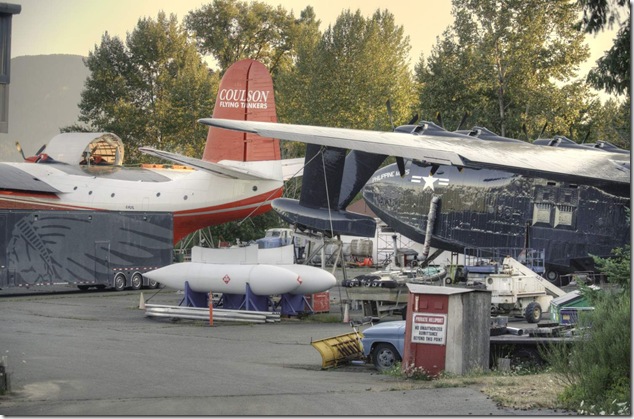
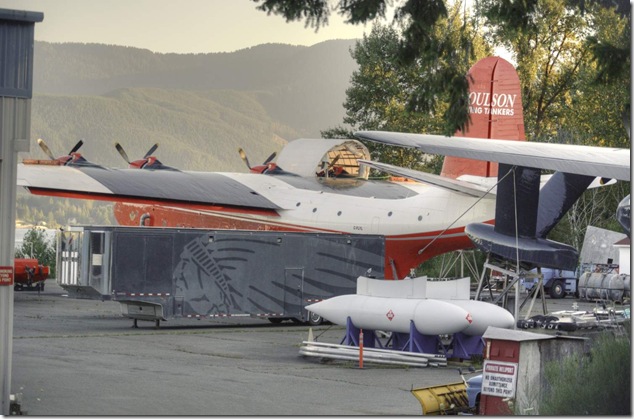
You can only get glimpses of these beautiful airplanes, which is terribly sad as they are powerful fire fighting tools that may fade from memory on Vancouver Island. The Martin JRM Mars was originally designed and built in limited numbers for the U.S. Navy during the World War II era. It was the largest Allied flying boat to enter production, although only seven were built.

The Philippine Mars was repainted in it’s original blue for a pending trade to the Naval Aviation Museum in Pensacola, Florida. The red Hawaii Mars is operational and sadly is going to be part of the British Columbia forest fire defence team.

Martin Mars,Sproat Lake, Highway 4,Coulson Flying Tankers,Vancouver Island Images,Philippine Mars ,Hawaii Mars

The Hawaii Mars has an EFIS Glass Cockpit and the ability to stream live data including Flight Tracking, Load Data measuring, Aircraft Performance statistics, Atmospheric Condition at Drop readings, and Drop Location reporting.

Martin Mars,Sproat Lake, Highway 4,Coulson Flying Tankers,Vancouver Island Images,Philippine Mars ,Hawaii Mars

  • Crew: four (with accommodations for a second relief crew)
  • Capacity: 133 troops, or 84 litter patients and 25 attendants
  • Payload: 15,000 kg of cargo
  • Length: 35.74 m
  • Wingspan: 60.96 m
  • Height: 11.71 m
  • Wing area: 342.4 m²
  • Empty weight: 34,279 kg
  • Loaded weight: 40,820 kg
  • Water Capacity: 27,276 litres
  • Max. takeoff weight: 74,800 kg
  • Power plant: 4 × Wright R-3350-24WA Duplex Cyclone 18-cylinder radial engines, 2,500 hp (1,900 kW) each
  • Maximum speed: 192 knots
  • Cruise speed: 165 knots
  • Range: 4,300 nautical miles
  • Service ceiling: 4,450 m
Posted in airplanes, history, tourism, Vancouver Island, Vancouver Island Images | Tagged , , , , , , | Leave a comment

Highway 4

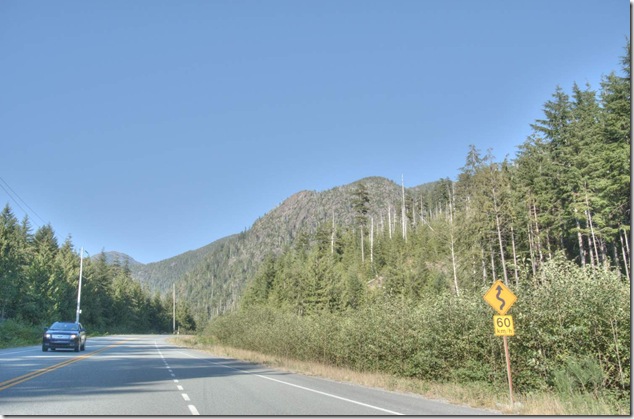
Originally connecting Coombs and Port Alberni, the “Alberni Highway” was originally designated as Highway 1A. In 1964 it was re-designated as Highway 4.

Pacific Rim Highway,Tofino,Highway 4,Pacific Rim Highway,Alberni Highway

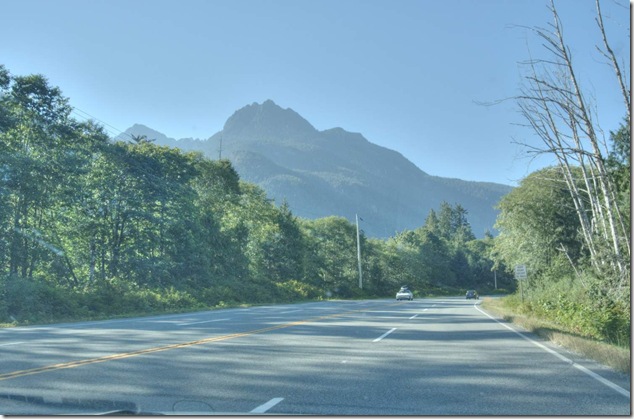
In 1959 a  logging road was punched through the mountains between Port Alberni and the coast. Travellers eager to reach the ocean could only use the logging road on the weekends when loggers had days off. Over time, restrictions on road use eased, and Tofino became an increasingly popular destination.

Pacific Rim Highway,Tofino,Highway 4,Pacific Rim Highway,Alberni Highway

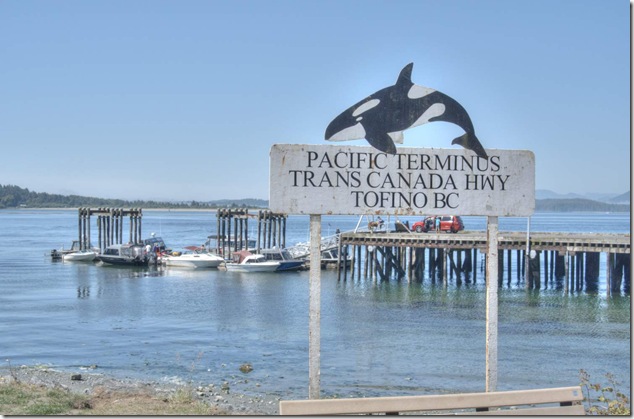
In 1961 Highway 4 was officially extended from Port Alberni to Tofino, creating the longest east-west main vehicle route on Vancouver Island, with a total length of 163 km.  The road was paved in 1972, making the “Pacific Rim Highway” Canada’s only paved road to the open Pacific Ocean, and Tofino the unofficial Pacific terminus of the Trans Canada Highway.

Pacific Rim Highway,Tofino,Highway 4,Pacific Rim Highway,Alberni Highway

Posted in history, Pacific Rim, Vancouver Island, Vancouver Island Images | Tagged , , , | Leave a comment

Tofino – Beach treasures

beach,marine life,ocean,Chesterman Beach,Vancouver Island Images,Tofino

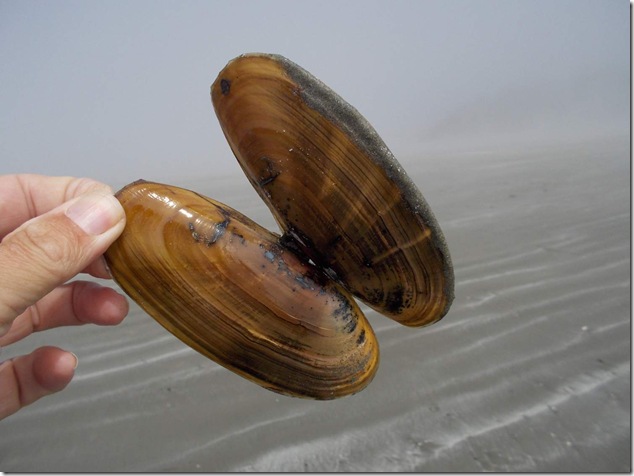
Some wonderful beach treasures that I picked up, enjoyed, and, and then replaced for the next person to enjoy.

beach,marine life,ocean,Chesterman Beach,Vancouver Island Images,Tofino

beach,marine life,ocean,Chesterman Beach,Vancouver Island Images,Tofino

beach,marine life,ocean,Chesterman Beach,Vancouver Island Images,Tofino

Beach treasures – Chesterman Beach

Posted in Beach, marine life, nature, ocean, Vancouver Island, Vancouver Island Images | Tagged , , , , , | Leave a comment

Tofino – A beach mystery

beach,marine life,ocean,Chesterman Beach,Vancouver Island Images,Tofino

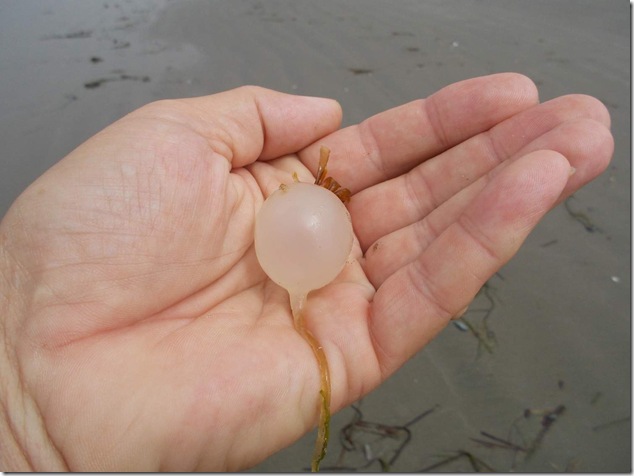
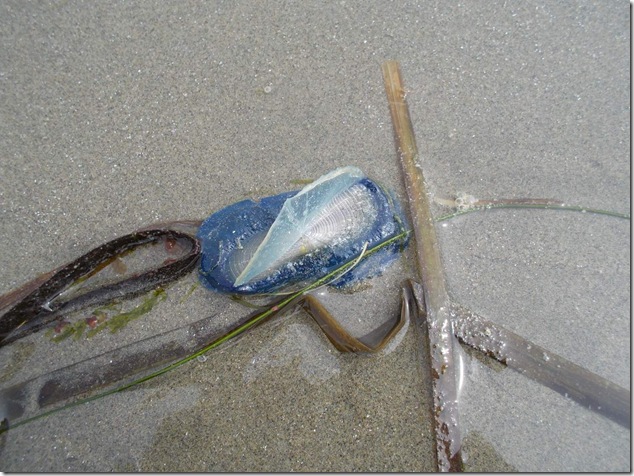
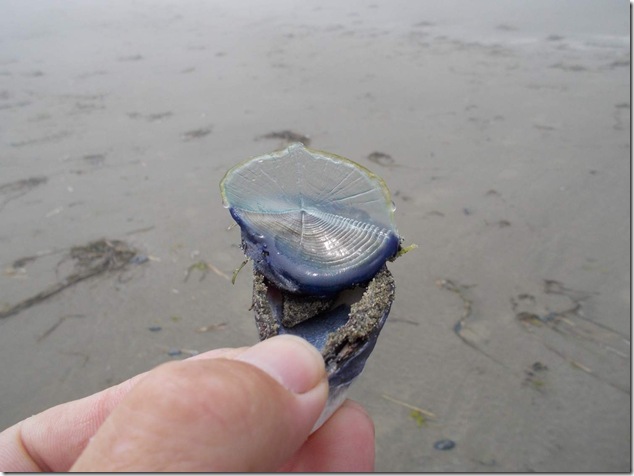
I have no idea what this is but there were lots of them on Chesterman Beach near Tofino – they move about by floating on the waves and land on the shore as the tide ebbs. I picked it up on a shell in case they are stingy things like jelly beasts.

beach,marine life,ocean,Chesterman Beach,Vancouver Island Images,Tofino

beach,marine life,ocean,Chesterman Beach,Vancouver Island Images,Tofino

beach,marine life,ocean,Chesterman Beach,Vancouver Island Images,Tofino

As it turns out, these are Velella – “by the wind sailors” They’re Cnidarians and wash up on the shore in huge numbers occasionally…

Posted in Beach, marine life, ocean, Vancouver Island, Vancouver Island Images | Tagged , , , , , , | Leave a comment

C-FOAR – Regional Gliding School (Pacific)

Regional Gliding School (Pacific),Air Cadets,RCAF,19 Wing,CFB Comox,C-FOAR,Cessna 182P 

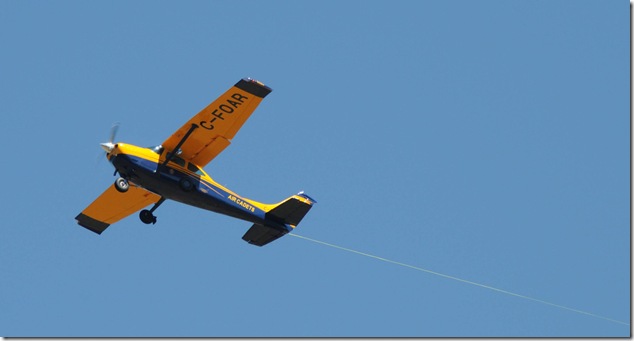
C-FOAR, a Regional Gliding School (Pacific) Cessna 182P.


C-FOAR is used by Regional Gliding School (Pacific)  to support glider and powered flight pilot training.

Posted in airplanes, CFB Comox, RCAF, Regional Gliding School (Pacific), Vancouver Island Images | Tagged , , , , , , | Leave a comment

C-FCGS – Regional Gliding School (Pacific)

Regional Gliding School (Pacific),Air Cadets,RCAF,19 Wing,CFB Comox,C-FCGS

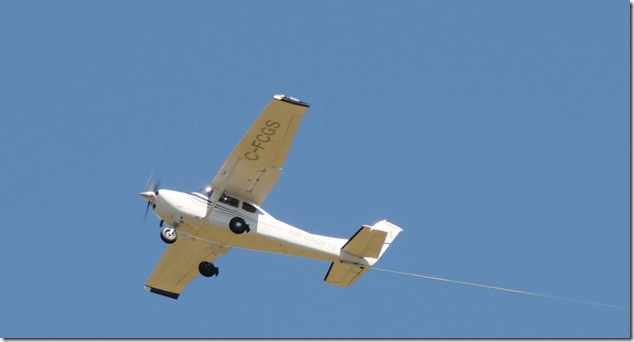
C-FCGS, a Regional Gliding School (Pacific) Cessna 182P.


C-FCGS is used by Regional Gliding School (Pacific)  to support glider and powered flight pilot training.

Posted in airplanes, CFB Comox, RCAF, Regional Gliding School (Pacific), Vancouver Island Images | Tagged , , , , , | Leave a comment

C-GDXR – Regional Gliding School (Pacific)

Regional Gliding School (Pacific),Air Cadets,RCAF,19 Wing,CFB Comox,C-GDXR,Schweizer SGS 2-33A

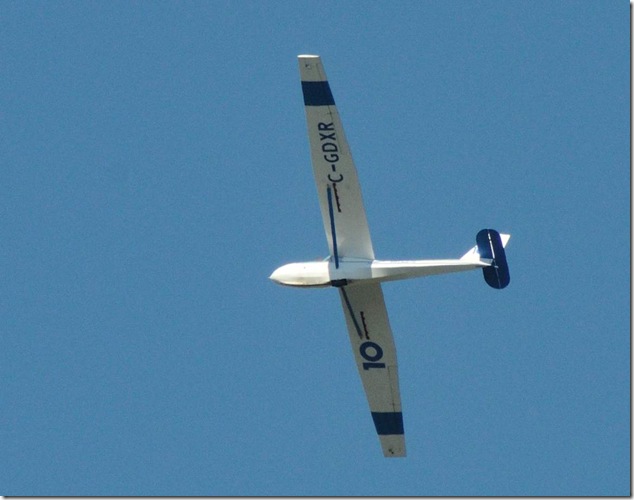
C-GDXR, a Regional Gliding School (Pacific) Schweizer SGS 2-33A glider

The SGS-233A is a conventional tow-place tandem, intermediate-training sailplane, manufactured by Schweizer Aircraft Corporation of Elmira, New York, USA.

It is primarily of all metal construction with fabric covering on the fuselage and tail surfaces. It has a one piece canopy for increased visibility. The wings are tapered in the outboard section and have dive-brakes incorporated. The 2-33 aircraft forms the mainstay of the Royal Canadian Air Cadets gliding program

Posted in airplanes, CFB Comox, RCAF, Regional Gliding School (Pacific), Vancouver Island Images | Tagged , , , , , , | Leave a comment